In 2026, running an iOS app on an Apple silicon Mac is straightforward: open the App Store, search for your app, and install it directly. Most iPhone and iPad apps are available this way, and for the majority of users that is the whole story. The method below exists for edge cases where an app isn't listed in the Mac App Store — but treat it as a last resort, not a first step.
Contents
The normal route: Mac App Store
Any Mac with Apple silicon — M1 through to the latest M-series chips — can run iPhone and iPad apps natively. Open the App Store, find your app, and click Get or the price button. macOS handles the rest. The app will appear in Launchpad and behave like any other Mac application, with some limitations depending on what the developer has chosen to support.
Developers can opt their apps out of appearing in the Mac App Store, so if you can't find a specific iOS app there, it's likely the developer has deliberately excluded it from Mac distribution. In that case, the best course of action is to contact the developer and ask them to enable Mac support — or wait until they do. If you genuinely need to sideload a copy you already own and have no other option, Apple Configurator 2 offers a legitimate, Apple-sanctioned path.
Apple Configurator 2
Apple Configurator 2 is published by Apple Distribution International and is free on the Mac App Store. It is primarily designed to help IT administrators deploy and manage large numbers of iPhone, iPad, iPod touch, and Apple TV devices in schools and businesses — including integration with Apple Business Manager and Apple School Manager. Version 2.19, released in November 2025, is the current build.
Apple Configurator 2 on the App Store
A useful side effect of its App Store connectivity is that it can download properly signed, App Store-reviewed .ipa files tied to your Apple ID. That makes it a clean, legitimate way to obtain an iOS app binary without resorting to third-party tools or unsigned packages.
Steps to install your iOS app via Apple Configurator 2
You will need an iPhone or iPad signed in to the same Apple ID you use on your Apple silicon Mac, a Lightning or USB-C cable, and Apple Configurator 2 installed on the Mac.
- Open Apple Configurator 2 on your Mac.
- Connect your iPhone or iPad to the Mac via USB. The device must be signed in to the same Apple ID you use on the Mac.
- In Apple Configurator 2, go to Account → Sign In… and sign in with your Apple ID.
- Right-click the connected device in the Apple Configurator 2 window and choose Add → Apps…
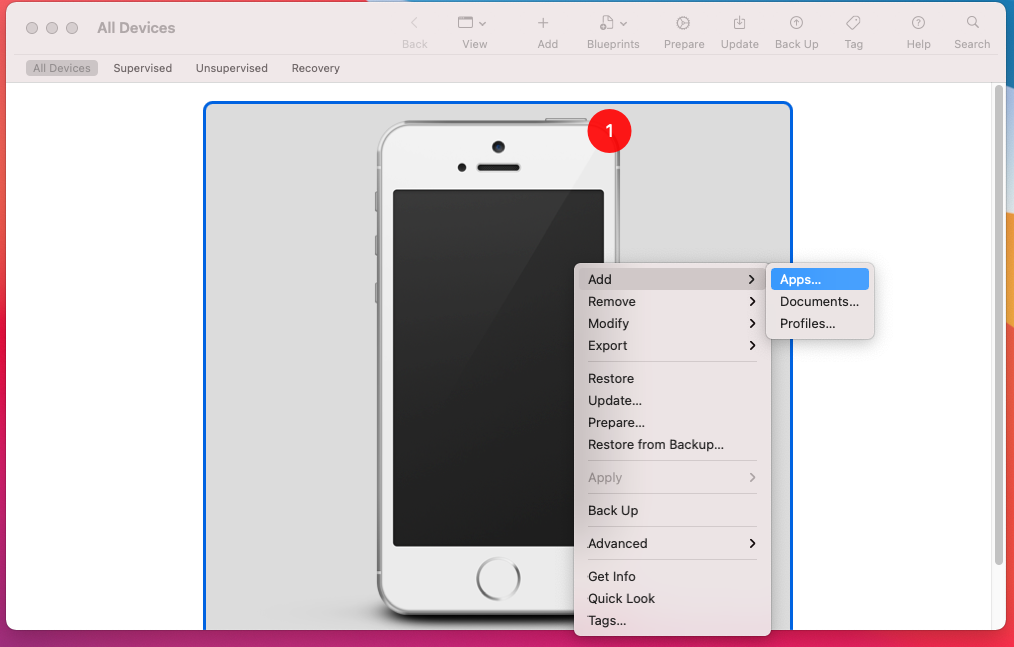
- Find the app you want and click Add. Apple Configurator 2 will download and install it on the connected device. If prompted to replace an existing copy, do not click anything yet — wait for the download to complete first.
- Open Finder, choose Go → Go to Folder…, and navigate to:
~/Library/Group Containers/K36BKF7T3D.group.com.apple.configurator/ - From there, navigate to
Library/Caches/Assets/TemporaryItems/MobileApps. - Inside a subfolder you will find the
.ipafile — the iOS application bundle, signed by Apple directly from the App Store.
- Copy the
.ipato your Desktop or another convenient location on your Apple silicon Mac.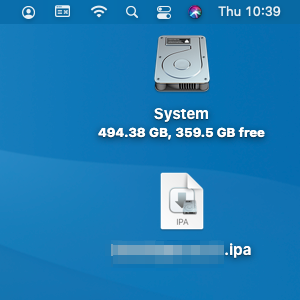
- Double-click the
.ipato install it on the Mac.
Because the .ipa is a properly signed App Store binary tied to your Apple ID, macOS Gatekeeper won't block it. There are no unsigned-app warnings, no workarounds needed. That said, not every iOS app runs well — or at all — on macOS. Touch-specific interfaces, GPS features, cellular functions, and certain sensors simply don't translate. If the developer hasn't tested or optimised the app for Mac, expect rough edges. The right long-term answer is always a properly supported Mac version from the developer.