Flutter in 2026: Still the Right Bet
Flutter is an open-source software development kit created by Google. It supports cross-platform development from a single codebase across Android, iOS, web, Windows, macOS, Linux, and beyond. What began in 2014 as a Google experiment codenamed "Sky" and launched publicly in December 2018 has, by 2026, grown into one of the most widely adopted mobile and multi-platform frameworks in the world — powering everything from Google's own products to smart-city super apps, airline booking systems, and casino resort experiences.
I was at the Flutter 1.0 launch at the Science Museum in London in December 2018. I could see the potential immediately and became an early adopter. That instinct has held up. I have now built or managed dozens of apps to production on the App Store and Google Play, all built on Flutter by talented teams of professional developers. In 2026, I have no reason to change course.
Contents
Why Flutter?
I have been working on mobile applications for over twenty years: starting with the original Nokia Communicators and SyncML; through the Symbian era with Nokia Series 60 and Sony Ericsson UIQ; and into the modern smartphone age.
I product-managed the first successful automated test tools for Symbian, Windows Mobile, Qualcomm Brew, and early BlackBerry 10 devices. I have managed app development for Apple iOS and Google Android ever since. Cross-platform development has always been close to my heart — and close to my frustration.
There is no room in small-budget projects or early-stage startups for a sprawling team of platform zealots. Cross-platform developers tend to carry a broader, more pragmatic perspective — comfortable across front-end and back-end, across platforms and toolchains. I prefer working that way.
The problem has always been compromise. One platform gets treated as the reference, the other gets a port. Platform capabilities get muted by technical or pragmatic limitations in the toolchain. Features that feel native on one device feel slightly wrong on another.
Flutter addresses these problems in a genuinely different way. Rather than wrapping native components, it renders its own UI at 60 or 120 frames per second using the Skia and Impeller graphics engines. The result is consistent, high-quality interfaces across every platform it targets — without the lowest-common-denominator trade-offs I spent years managing around.
When I made the decision to standardise on Flutter, I framed it as a ten-year bet. We are now well into that window, and the framework has grown faster and further than I expected.
Flutter in 2026: The Numbers Speak
Flutter is no longer an early-adopter story. As of December 2024, Flutter had over one million monthly active developers globally. It powers nearly 30% of all new iOS apps — up from around 10% of tracked free apps in the Apple App Store in 2021, according to Apptopia data. It is a top-5 open-source project on GitHub by contributions, with over 1,400 contributors and more than 50,000 packages published by over 10,000 package authors. Over 90,000 developers participate in Flutter Meetups across more than 60 countries.
Google has described Flutter as entering its "production era." That phrase resonates with me. This is not a framework still finding its feet — it is one that enterprises, startups, and independent developers are betting serious money on.
Flutter is entering its production era — a framework that began as an experiment is now powering apps used by hundreds of millions of people.
Who Is Using Flutter?
The showcase of production Flutter apps has expanded dramatically. Google's own products built on Flutter now include NotebookLM, Google Pay, Google Earth, Google Ads, Google Classroom, YouTube Create, Google Cloud, Google One, FamilyLink, and Fitbit Ace. Beyond Google, the list of serious production deployments is long and growing:
- Scandinavian Airlines (SAS) rebuilt their mobile app in Flutter and won the Red Dot Design Award, the Webby People's Voice Award, and the iF Design Gold Award.
- Toyota uses Flutter for in-vehicle infotainment systems.
- LG Electronics is building the next generation of webOS with Flutter.
- Whirlpool cut development costs by 50% after adopting Flutter.
- Supercell reduced their core code size by 45%.
- PUBG MOBILE connects over one billion players using Flutter.
- talabat transitioned from siloed native development to a unified Flutter codebase in 2026.
- Expo City Dubai built a smart-city super app with Flutter in 2026.
- NotebookLM shipped a 4.8-star Flutter app in just seven months.
- Headspace, MGM Resorts, and Kikoff are all running Flutter in production.
- SNCF Connect used Flutter to prepare their app for the French summer sports events.
These are not side projects or MVPs. These are flagship, high-traffic, award-winning applications. The argument that Flutter is not ready for serious production work is simply no longer credible.
FlutterFlow
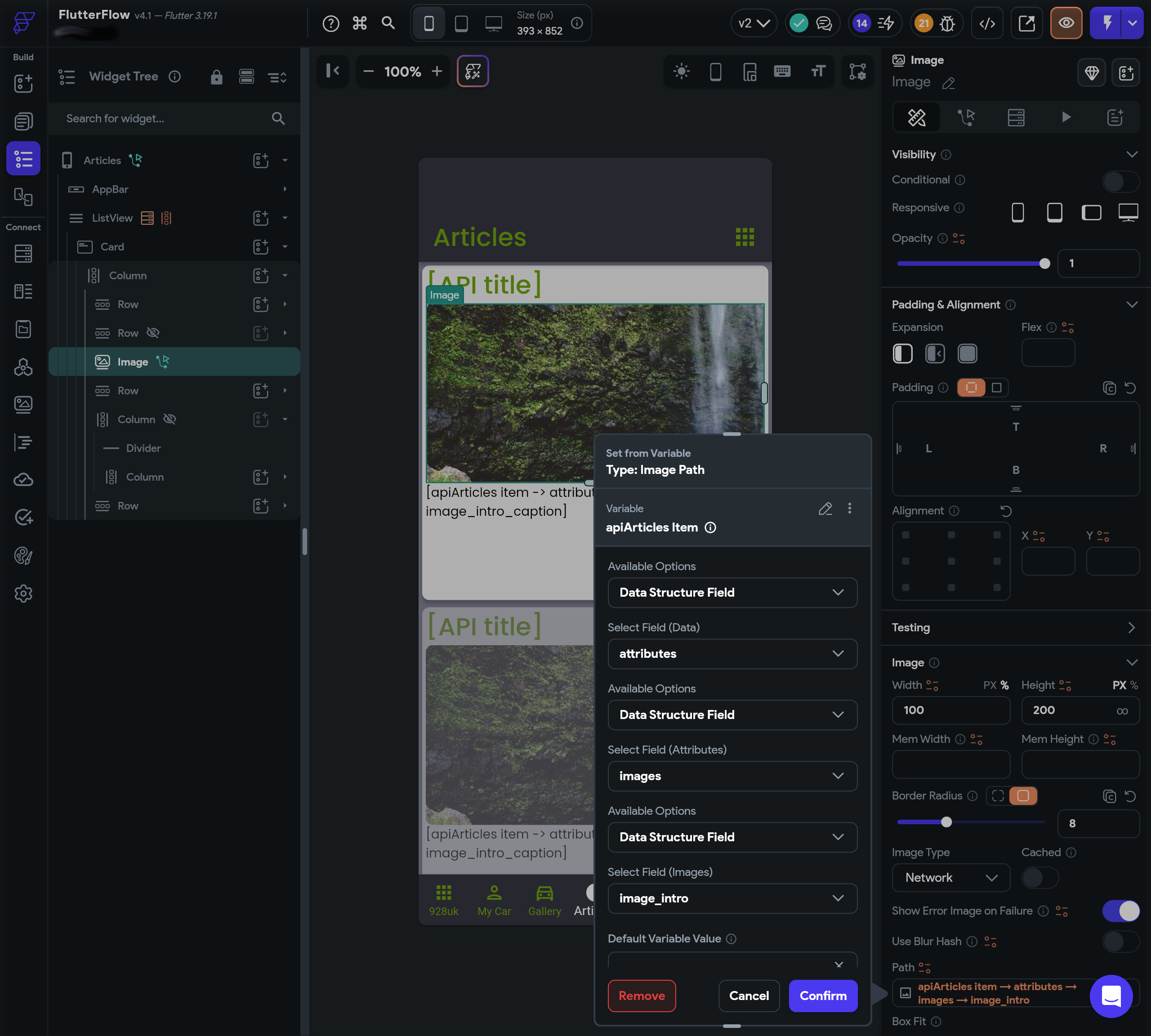
FlutterFlow is the real deal. It is a visual development environment that exports clean, editable Flutter source code directly into your DevOps pipeline via GitHub. It has matured considerably since I first started using it, and in 2026 it sits comfortably in the workflow of both professional developers and product managers who want to get further through a build before handing off to engineering.
It is quite realistic to publish an app built entirely in FlutterFlow, or to build a prototype app there to test out feasibility. The gap between what a technically minded non-engineer can produce in FlutterFlow and what a full development team would build has narrowed significantly. You can read more about my work with FlutterFlow elsewhere on this site, although I've lessened my use of it more recently it is a great toolset and you should check it out.
Flutter in My Own Projects
One example I return to often is a small community app I manage — built alongside a long-running online community that has existed since 1998. Originally written in 2021 in FlutterFlow and published on Google Play, and the App Store simultaneously with identicl features it was refreshed and updated in 2026 with minimal effort. That is the compounding benefit of Flutter: apps written several years ago do not feel like legacy code. The framework evolves, the tooling improves, and updating an existing app to take advantage of new capabilities can be straightforward.
For larger client projects, we ported an app from JavaScript and an end-of-life cross-platform framework to Dart and Flutter. That migration took several months and represented real technical debt to clear. But the payoff was sustained: new feature development was faster, the codebase is cleaner, and the company was acquired.

The Honest Assessment
Flutter is not perfect. No framework is. There are edge cases where deep platform integration still requires native code. Package quality varies across the ecosystem, as it does in any large open-source community. And while Flutter's web support has improved substantially, it remains better suited to some web use cases than others.
But the trajectory is unambiguous. A framework that covered two mobile platforms in 2018 now supports six major platforms. A framework used by early adopters and experimenters in 2019 now powers apps used by hundreds of millions of people. A framework that was a promising bet in 2018 is, in 2026, an obvious choice for anyone building a cross-platform product with a serious ambition and a realistic budget.
If you are still evaluating Flutter versus the alternatives, the question has largely been answered by the market. The more interesting question now is how you use it — and that is where tools like FlutterFlow, the depth of the package ecosystem, and the quality of the developer community make the real difference.
Note: An earlier version of this article was originally published on my LinkedIn. This version has been substantially updated for 2026.