The Loudest Text You Never Signed Up For
The UK Emergency Alert system has become one of the more consequential infrastructure deployments in British telecommunications, capable of pushing a loud, siren-like notification to compatible mobile devices simultaneously across a geographic area without collecting a single phone number or piece of location data from recipients. As of August 2026, the GOV. UK alerts portal reports two current active alerts, with the most recent dispatched at 7:01pm on Friday, 14 August 2026, underscoring that the system has moved well beyond its initial test phase into routine operational use.
TL;DR – There are some concerns about this technology which we outline below along wth instructions for opting out or switching these alrerts off, and the background to this technology is described furter in our UK Emergency Alert backgrounder
Contents
- The Loudest Text You Never Signed Up For
- How Cell Broadcast Technology Works
- Real-World Activations and Expanding Scope
- A Necessary Lifeline or an Orwellian Overreach?
- Who Controls the Siren and Under What Rules?
- Governance and Accountability
- How to Opt Out and What You Lose by Doing So
- Disabling Alerts on iOS and Android
- Alternative Warning Channels
- Guidance for Organisations and Professionals
How Cell Broadcast Technology Works
The system operates on cell broadcast technology, which transmits alert messages from cell towers to all compatible devices within range simultaneously. Unlike SMS, which routes messages through individual subscriber records, cell broadcast requires no knowledge of a user's phone number, registered address, or location services status. Devices receive alerts based purely on which cell towers they are connected to at a given moment, meaning a commuter passing through a flood zone receives the same warning as a local resident.
Upon receipt, a compatible phone or tablet produces a loud siren-like sound lasting approximately ten seconds, vibrates, and can read the alert aloud. Critically, this behaviour occurs even when the device is set to silent, a design choice that prioritises life-safety notification over user preference settings.
Real-World Activations and Expanding Scope
Authorised senders include emergency services, UK and devolved government departments, and public bodies such as police forces and local councils. Qualifying threat categories span wildfires, severe flooding, and extreme storms. The system explicitly complements, rather than replaces, broadcast radio, television, and social media channels, and accessibility features including audio and vibration signals are available for users with vision or hearing impairments.
The GOV. UK guidance is equally direct about what the service will never do: it will not send emails, and it will never request personal details from recipients, a distinction that has become operationally important as phishing campaigns attempt to exploit public familiarity with the alert brand.
A Necessary Lifeline or an Orwellian Overreach?
Since the UK government's Emergency Alerts system began issuing warnings for threats including severe flooding, wildfires, and extreme storms, it has attracted both praise from resilience professionals and sharp criticism from civil liberties advocates. The debate cuts to fundamental questions about the appropriate reach of state communication infrastructure into privately owned devices.
The system operates on an opt-out default, meaning compatible mobile phones and tablets receive alerts automatically without any prior registration. Critics argue this arrangement represents an uncomfortable extension of state authority, with government departments, agencies, and emergency services able to trigger loud, siren-like sounds on personal devices even when those devices are set to silent. For some commentators, the architecture of the system, which pushes alerts based on a handset's current location rather than a registered address, reinforces what they describe as a cold-war bunker mentality, and has provided fertile ground for conspiracy theories about government surveillance of movement and behaviour.
A more substantive safeguarding concern centres on individuals who rely on secondary or secret phones to maintain safety, including those fleeing domestic abuse or political persecution. An unexpected, loud alert on a concealed device could, in specific circumstances, expose a person's location or the existence of the phone to an abuser or persecutor.
Emergency management and resilience professionals, however, push back firmly against these critiques. The government's own guidance is explicit that no personal data is required: authorities do not need to know a user's phone number or location to issue an alert, and location services need not be enabled. Alerts are delivered via cell broadcast technology rather than targeted messaging, a distinction that supporters argue fundamentally separates the system from surveillance.
For resilience practitioners, the public safety calculus is straightforward. A system capable of reaching people in real time during wildfires, flash flooding, or extreme storms, without dependence on local news, radio, or social media uptake, represents a meaningful advance in population-level warning capability. The tension between those two positions is unlikely to be resolved quickly, and it will sharpen each time a major alert is issued.
Who Controls the Siren and Under What Rules?
The UK Emergency Alerts system operates under a defined but deliberately broad authorisation framework. According to official government guidance, alerts may be issued by the emergency services, government departments, agencies and public bodies that deal with emergencies. The Prepare campaign guidance further specifies that this remit extends to devolved governments, police forces, and local councils, giving the system a notably distributed command structure compared with many international equivalents.
In practice, this means that a severe flooding event in Wales could trigger an alert issued in both English and Welsh by the Welsh Government, while a wildfire in a rural English county could see a local council or police force initiate the broadcast. The system's cell-broadcast architecture means recipients are targeted by current physical location rather than registered address, a design choice that raises questions about jurisdictional boundaries when emergencies straddle administrative borders.
Governance and Accountability
The governance framework has attracted scrutiny from emergency management professionals. Unlike the United States' Integrated Public Alert and Warning System, which operates under Federal Emergency Management Agency oversight with documented authorisation tiers, or the Netherlands' NL-Alert system, which publishes detailed post-incident evaluations, the UK framework does not publicly specify a formal proportionality threshold that must be met before an alert is issued. Critics argue this creates accountability gaps, particularly regarding which body bears responsibility when alerts cause disruption without a commensurate threat materialising.
The absence of a published misuse-prevention protocol is a concern that industry observers have noted, given that the system reaches all compatible devices within a cell area simultaneously, regardless of individual vulnerability or context. As the frequency of severe weather events increases, pressure on authorised bodies to act quickly may test the boundaries of the current oversight model.
| Jurisdiction | Primary Issuing Authority | Oversight Body |
|---|---|---|
| United Kingdom | Government departments, devolved administrations, police, local councils | Not publicly specified |
| United States | FEMA, National Weather Service, state and local authorities | Federal Communications Commission |
| Netherlands | Ministry of Justice and Security, regional safety boards | National Crisis Centre |
How to Opt Out and What You Lose by Doing So
The UK Emergency Alerts system operates on a tiered architecture that grants users partial, but not total, control over what their devices receive. Understanding those limits is essential for professionals advising organisations, care providers, or vulnerable individuals on emergency preparedness policy.
Disabling Alerts on iOS and Android
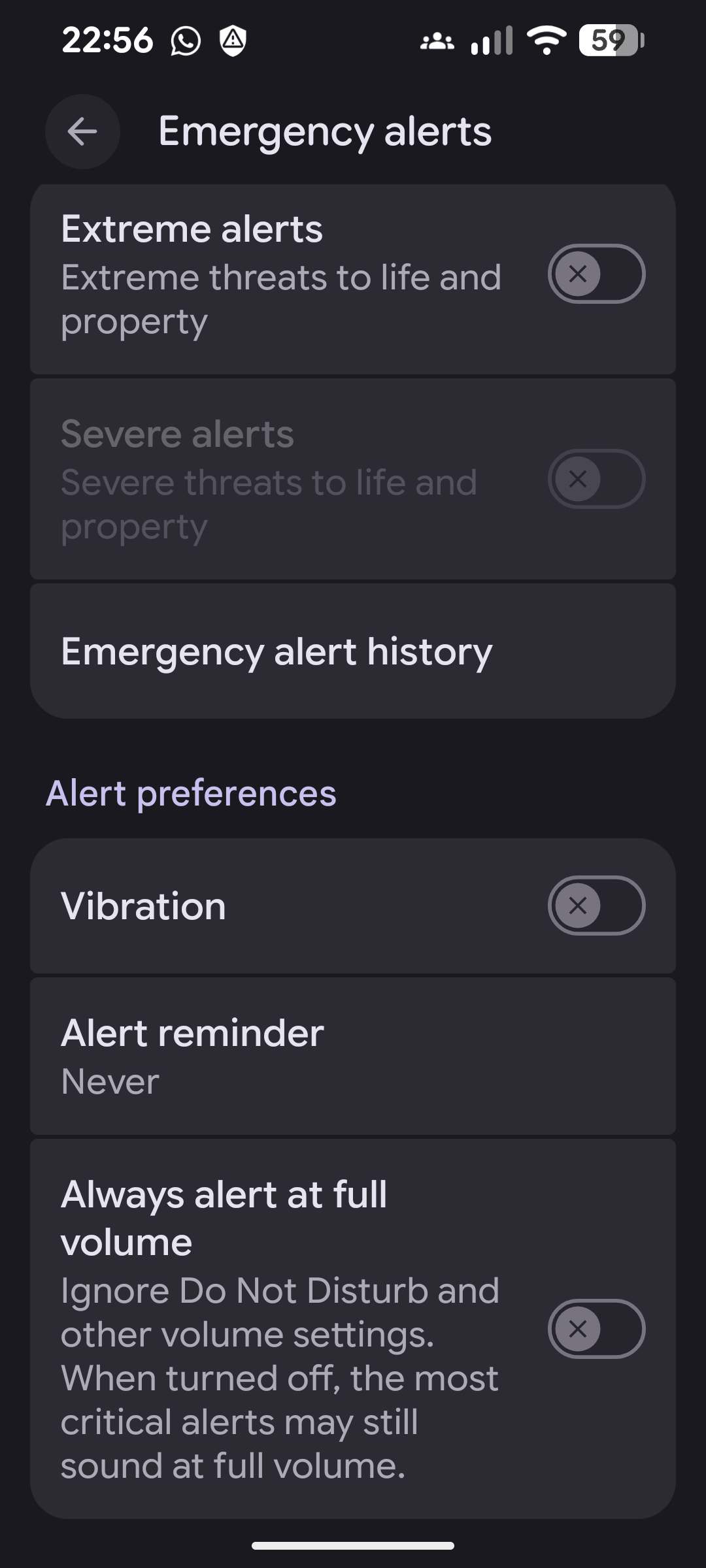
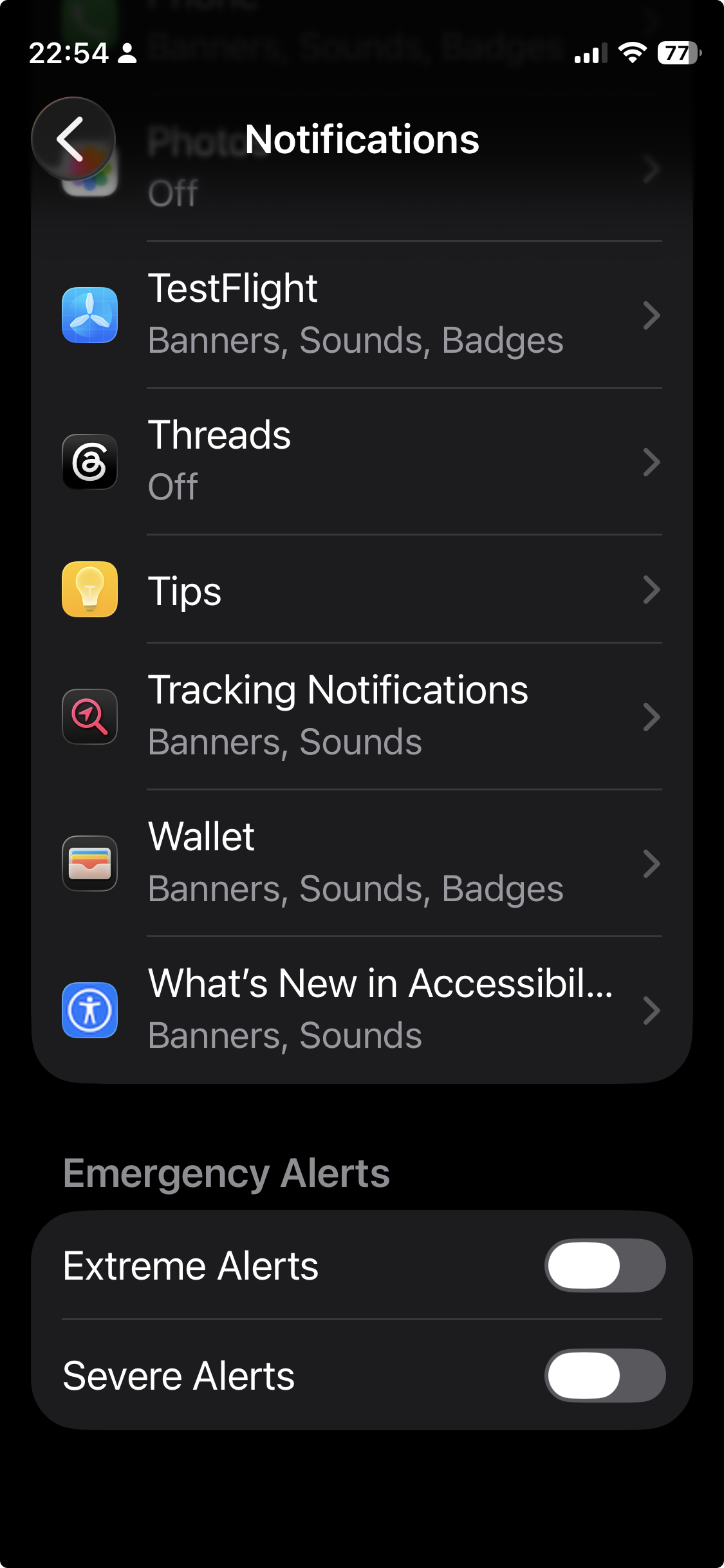
On iOS, users should handle to Settings, then Notifications, then scroll to the bottom of the screen to find Government Alerts. From there, individual alert categories can be toggled off. On Android, the equivalent path runs through Settings, then Safety and Emergency, then Wireless Emergency Alerts, where granular controls are available by alert tier.
Extreme alerts and Severe alerts, can both be disabled on either platform.
Alternative Warning Channels
Those who opt out of discretionary alert tiers, or who do not hold a compatible device, are not left entirely without warning. According to the UK government's own guidance, the emergency services retain independent channels to warn the public of threats to life. The government has also confirmed that Emergency Alerts will not replace local news, radio, television, or social media as information sources.
Supplementary opt-in services remain available, including the Environment Agency's flood warning service, Met Office severe weather alerts, and live radio broadcasts. The government's Prepare campaign explicitly recommends that individuals at flood risk register separately for those targeted warnings.
Guidance for Organisations and Professionals
For professionals advising care homes, schools, or community organisations, the practical implication is clear: opt-out should not be treated as a complete safety solution. Organisations should maintain parallel communication protocols, including radio monitoring, staff briefing procedures, and sign-up to relevant local authority warning schemes and resilience forums, to ensure that individuals who cannot receive or act on mobile alerts are not left without recourse during a declared emergency.
Accessibility provisions within the system, including audio readout and vibration signals for those with vision or hearing impairments, should also be reviewed and enabled on managed devices as a matter of standard practice.