Affordable, reliable, and packed with features, Roku streaming players remain one of the smartest ways to breathe new life into an older television in 2026. Streaming has now overtaken cable and broadcast combined — Nielsen confirmed this milestone in mid-2025 — and Roku has kept pace with that shift, refreshing its device lineup and pushing regular software updates even to older hardware. Whether you own a decade-old flat-screen or a secondary bedroom TV gathering dust, a Roku player is still one of the lowest-effort, lowest-cost ways to turn it into a fully capable streaming machine.
Roku devices connect via HDMI and deliver fast, smooth playback across all the major services: Netflix, BBC iPlayer, Channel 4, Amazon Prime Video, Disney+, and Apple TV+. Several models support 4K, HDR, and Dolby Vision. Voice control is standard across the range, letting you search, launch apps, and adjust settings without picking up a remote. The Roku mobile app extends that further, turning your phone into a second remote and letting you cast videos, music, and photos directly to your TV. The platform itself is free to use — you only pay for the streaming subscriptions you choose.
TL;DR – I've been using Roku devices to transform older non-smart TVs for well over a decade, and even my oldest hardware still receives software updates. The 2025-generation sticks are smaller and more capable than ever. Highly recommended.
Contents
Which Roku?
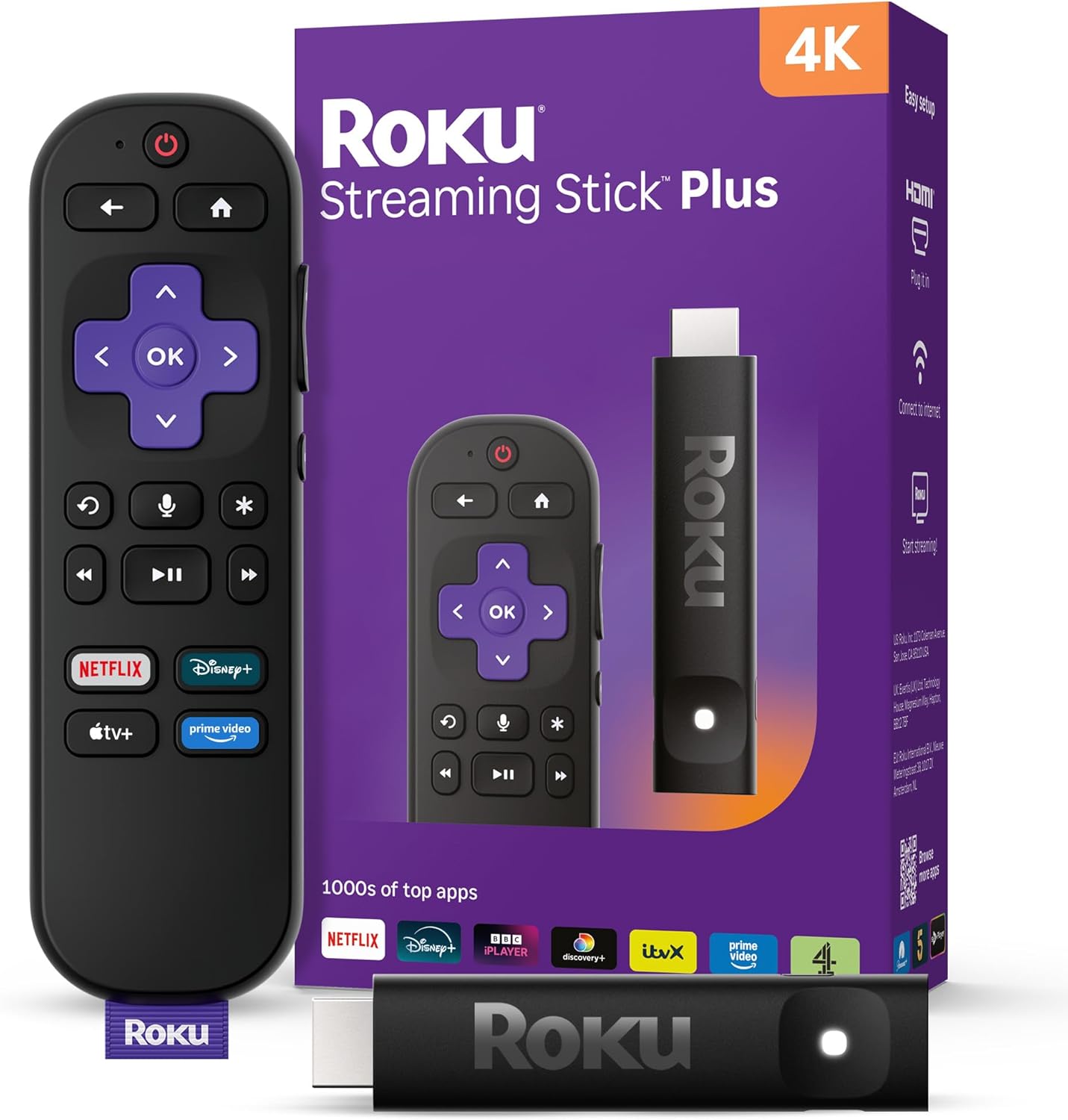
Roku refreshed its stick lineup for the UK in 2025 with two new models — the Streaming Stick and the Streaming Stick Plus — both of which are dramatically more compact than their predecessors, barely larger than an HDMI port itself, and powered directly from the TV so there are no trailing cables. Here's how the current range breaks down.

Why Roku?
Once you buy a Roku device, there are no platform fees. You won't pay anything to watch free channels, and creating a Roku account costs nothing. You only pay for the streaming subscriptions you choose — Netflix, Disney+, Apple TV+, and so on — or for individual film rentals. Everything else, including hundreds of free ad-supported channels, is included from day one.
Roku's longevity is also genuinely impressive. The company continues to push software updates to devices that are several years old, which means your investment holds its value far longer than with many rival platforms. The Roku OS interface has also matured significantly: it's fast, uncluttered, and consistent across the entire device range.
One area where Roku is actively investing is content discovery. Finding something to watch has become a real friction point — streaming viewers now spend an average of 20 minutes searching for their next watch, compared to around 7.5 minutes just a few years ago. Roku is responding with AI-driven personalisation features designed to surface relevant content faster, and the platform's integration with major services means recommendations pull from your full library of subscriptions in one place rather than forcing you to open each app separately.
I especially recommend the Roku Streaming Stick if you're looking for an inexpensive way to upgrade an HD TV to make it smarter and snappier.
Requires an internet connection
You'll need a broadband connection to use any Roku device. Most models connect via dual-band Wi-Fi, and the Roku Ultra adds a wired Ethernet port for households where a stable, high-speed connection matters most. If your router is in a different room from the TV, the Streaming Stick Plus's improved wireless performance makes it the better stick-form choice over the base model.
Brilliant at home or in hotels
At home, setup takes a couple of minutes: plug in, connect to Wi-Fi, sign in to your Roku account, and you're streaming. Away from home, Roku has long offered a feature called Hotel & Dorm Connect, which handles the browser-based authentication that hotel networks typically require. Rather than wrestling with a hotel's login portal on your TV, you validate the connection through your phone or laptop, and the Roku picks it up automatically.
To check whether a specific model supports Hotel & Dorm Connect, refer to Roku's official device comparison page. Bear in mind that content availability varies by country — some services are geo-restricted and won't work outside the UK even on a Roku that supports the feature.
Essential travel checklist
- An activated Roku device, its power adapter (if needed), and the remote. If the device has been unused for a while, reconnect it at home first and check for software updates before you travel.
- A smartphone or laptop with Wi-Fi and a browser, for the hotel authentication step.
- A High-Speed HDMI cable — unless you're using a Streaming Stick, which plugs directly into the TV's HDMI port.
Additional considerations in hotels
- Streaming quality depends entirely on the hotel's connection speed, which varies enormously.
- Some streaming services detect your location and restrict content accordingly — this applies even when you're logged into your own account.
See also How to Choose and Connect a Roku Streaming Stick Correctly and Roku 3840EU Streaming Stick